The other half of the programme
Turkish folk dances
A guide to the Turkish folk dances a belly dance dinner show may draw on: halay, zeybek, horon and the spoon dances, and what each looks and sounds like.
Book the belly dance dinner show ↗Quick answer
Most Turkish folk dance is danced in lines or circles, and the best-known families are halay, zeybek, horon and the spoon dances. The ticket for this evening lists traditional folk dances without naming them, so this guide explains the families, not a running order.
What the ticket says
The ticket describes belly dancers, traditional folk dances and theatre, and says nothing more specific about the dances. Reviewers mention folk dances alongside the belly dancing, and one describes the mix as belly dance, folk dance and storytelling. Programmes change, so this guide does not predict what you will see. It explains the families of Turkish folk dance so that you can recognise a circle, a line or a slow solo when it appears.
A country of line dances
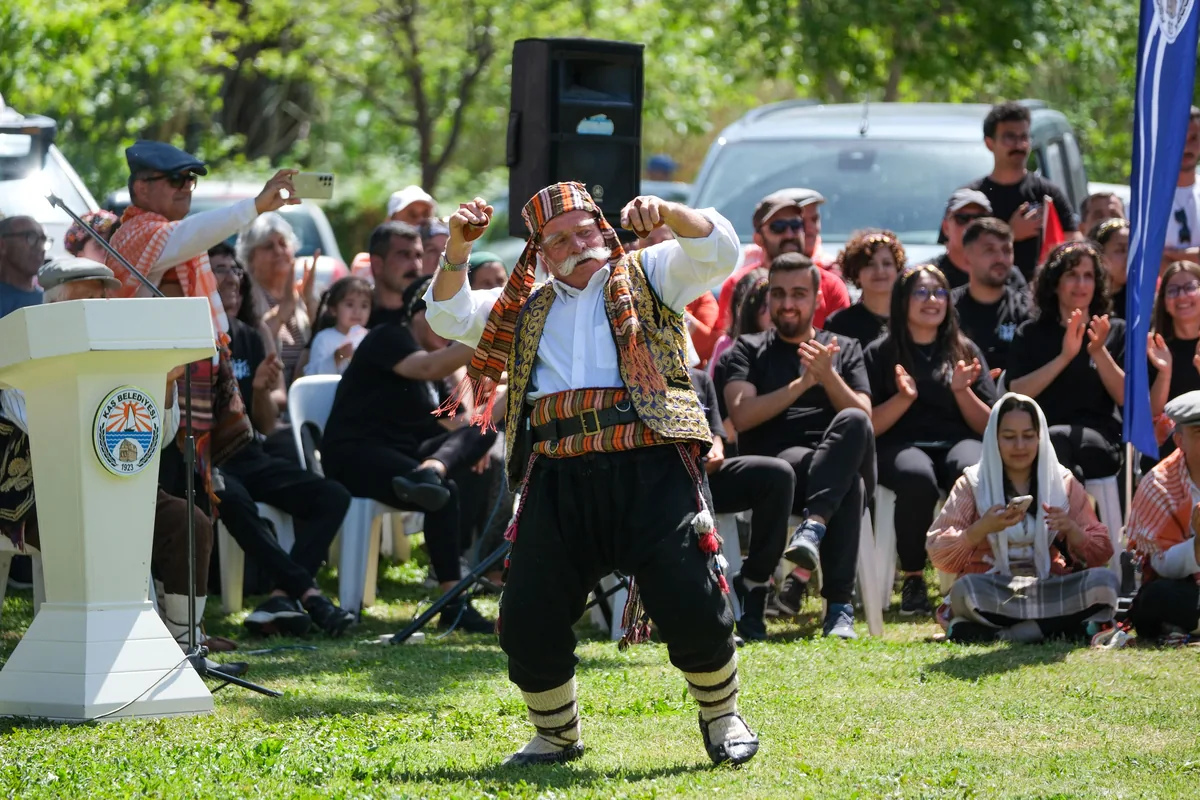
Wikipedia says Turkey's position on three seas and across major trade routes gave it a complex culture, which shows in how many dances it has; the dominant forms, it says, are line dances. It names zeybek in the Aegean region, halay across the central, southern, eastern and southeastern parts of the country, horon on the eastern Black Sea, spoon dances in and around Konya, and bar in the east among the best known.
Halay
In Wikipedia's account, halay is Turkey's national dance, a term that takes in every traditional circular and line dance in the country. Weddings and festive gatherings are where they are commonly danced, traditionally to the zurna and davul. Dancers form a circle or a line, linking fingers, hands or shoulders, and those at either end may hold a handkerchief, a mendil. The tempo rises as the dance goes on, and the name and style change from one town or village to the next.
Zeybek
Wikipedia describes zeybek as a folk dance from the Aegean region that is named after the zeybeks, irregular fighters in western Anatolia. It says the dance was historically performed by men, and that women's versions have appeared in modern performances. There are two main kinds: a slow, solemn ağır zeybek, often led by an efe, and a faster, livelier kıvrak zeybek. It says the dance stands for dignity, pride and heroism, and is danced at weddings and festivities.
Horon
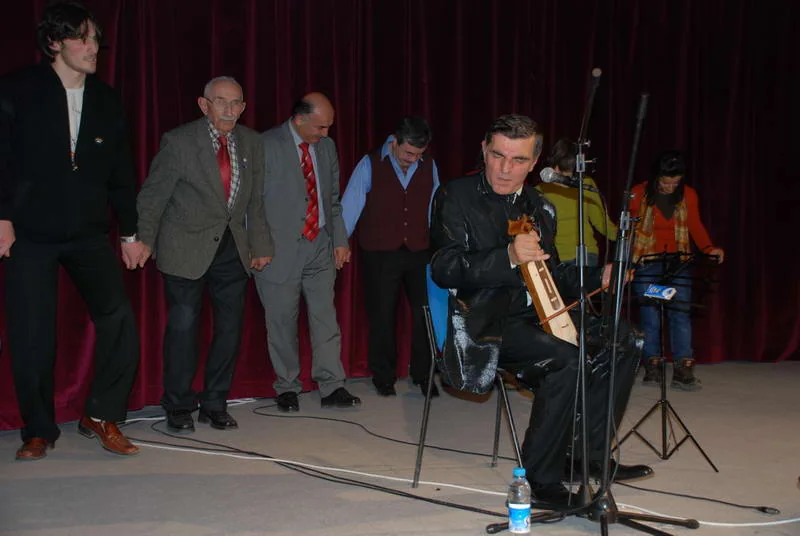
Wikipedia calls horon a group of traditional folk dances from the Eastern Black Sea region of Turkey, and says over 50 variations have been identified in a single region. The dance is typically performed in a line or semicircle by a group of men or women, with fast shoulder shimmies, trembling of the whole body and sudden squats. It says horon demands speed and agility, and is often danced to the kemençe, clarinet or bagpipe with davul and zurna.
Spoon dances and others
Wikipedia lists the spoon dances, called kaşık oyunları, as dances spread mostly over the Mediterranean region and always danced with wooden spoons. It names Dinar as probably the best known. It also lists kasap havası, the butcher's dance, as a modern dance from Istanbul and East Thrace, and names kolbastı, lezginka and samah among the other forms. Any of these could appear in a mixed programme, and none is promised by the ticket.
How to watch a circle
Look at the hands first: in halay they hold fingers, hands or shoulders, and the leader may wave a handkerchief. Then listen for the beat, because Turkish folk music often uses uneven rhythms such as 9/8. Watch for the tempo change, since halay begins slowly and accelerates. If the audience is invited to join, the circle is the easiest form to step into.
Who this isn't for
Which dances will be on stage on your date is not something this guide can say, because the ticket does not either. It also does not replace a dance teacher: it describes dances in broad terms from Wikipedia, and regional variants differ. If you want to learn a dance, look for a class. If you want to recognise one at dinner, the descriptions here are a start.
Frequently asked questions
Which folk dances will I see?
The ticket lists traditional folk dances but names none, and programmes change. Zeybek, halay and horon are among the best-known families.
What is halay?
Wikipedia calls it the national dance of Turkey: the term for traditional circular and line dances, often danced at weddings, to zurna and davul.
What is zeybek?
A folk dance from the Aegean region, historically performed by men, with a slow, solemn form and a faster one, according to Wikipedia.
Sources