Where the dance comes from
Oryantal dans: a history
A short history of belly dance in Turkey: köçek and çengi dancers, the taverns of Ottoman Istanbul, the cabaret years and the Romani musicians and dancers.
Book the belly dance dinner show ↗Quick answer
Belly dance in Turkey is called oryantal dans. Wikipedia describes it as a style that grew from Ottoman court and popular entertainment, Romani culture and Middle Eastern dance, and that became popular in the nightclubs and cabarets of twentieth-century Istanbul. Its roots lie in the köçek and çengi dancers of the Ottoman period.
A name with two forms
In Turkey belly dance is usually called oryantal dansı, from the French word for oriental, or göbek dansı, the belly dance. Wikipedia's article on oryantal dans describes it as a Turkish style, distinct from the Egyptian one, built from Ottoman court traditions, Romani culture and Middle Eastern dance forms. That mixed parentage is why a Turkish performance can feel different from the Egyptian style most people picture.
Köçek and çengi
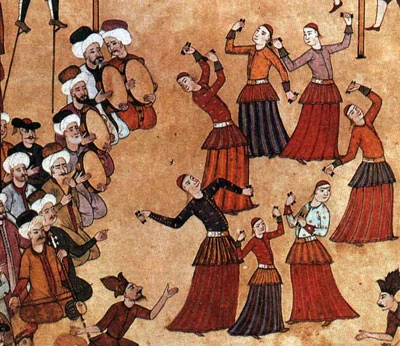
Wikipedia says the origins of belly dance in Turkey lie in Ottoman dance traditions, where from the sixteenth century the köçek was one of the most visible performers. Köçeks were young male dancers in ornate costume who danced at palace celebrations, weddings and public festivals. Beside them were the çengi, female dancers who combined movement, music and storytelling. The köçek article adds that the style flourished from the eighteenth to the nineteenth century and drew on Turkish folk dance as well as other elements.
The taverns of Istanbul
According to Wikipedia's article on the köçek, many Istanbul meyhanes, the night taverns serving meze, rakı or wine, hired köçeks, who danced among the spectators before beginning. It says that in 1805 there were approximately 600 köçek dancers working in the taverns of the capital. The same article records that they were outlawed in 1837 because of fighting among audience members, and that the tradition lost its imperial patrons later in the century.
From the late Ottoman era to the cabaret
Wikipedia's oryantal dans article says that by the late nineteenth and early twentieth centuries more female dancers appeared in public spaces in Istanbul, in taverns, festivals and early cabarets, as the köçek tradition declined. It credits the köçeks with a stylistic legacy of expressive isolations, theatrical flair and elaborate costume. In the early twentieth century, it says, nightlife in districts such as Beyoğlu and Şişli gave rise to a theatrical belly dance style distinct from the Egyptian one.
Romani musicians and dancers
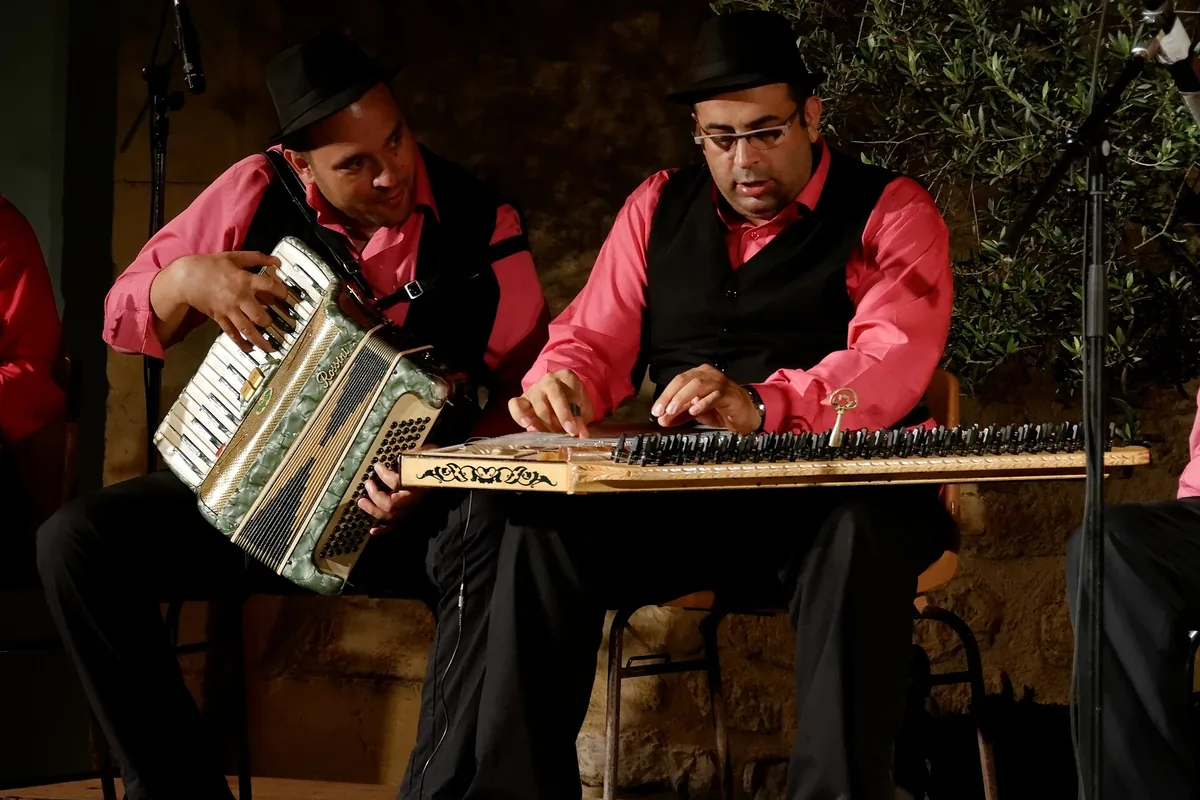
Wikipedia notes that many professional dancers and musicians in Turkey continue to be of Romani heritage, and that the Roma of Turkey have had a strong influence on the Turkish style. A 2014 article in Romani Studies examines the same subject and says Romani dance was long treated as stigmatised and kept outside the national picture of Turkish culture until the late twentieth century, when it began to be presented as one of that culture's colours. The history of the dance is partly a history of its musicians.
How it sounds and how it moves
Wikipedia says the music of Turkish oryantal draws on classical Ottoman music, Romani rhythms, Anatolian folk melodies and Arabic influences, with fast, driving rhythms and in particular the 9/8 time often called the karsilama rhythm. Typical instruments include the darbuka, zurna, kanun, clarinet, violin and sometimes accordion. Props include the veil and zills, the finger cymbals. It also calls the Turkish style faster, more theatrical and more acrobatic than the Egyptian one.
What this means for a dinner show
A dinner show in Istanbul stands in a long line of public entertainment in the city, from tavern dancers to cabaret stages. The ticket for the evening this site covers describes belly dancers, traditional folk dances and theatre in an Ottoman cabaret setting. It does not describe the choreography, so this history is background, not a description of the night. Treat it as a way to hear the rhythms and notice the costumes and the instruments.
Who this isn't for
A history cannot tell you whether a particular dinner show is good, and this one makes no claim about any dancer. It is also not a full scholarly account: the sources are Wikipedia and one academic article, and details such as dates and numbers vary between sources. If you want depth, start with the Romani Studies article. If you only want an evening out, book and enjoy the show.
Frequently asked questions
What is belly dance called in Turkey?
Oryantal dansı, usually shortened to oryantal, from the French for oriental, or göbek dansı, the belly dance, according to Wikipedia.
What were köçek and çengi?
Köçeks were young male dancers in ornate costume and çengi were female dancers, both performing in Ottoman court and popular settings, according to Wikipedia.
Who shaped the Turkish style?
Wikipedia credits Ottoman court traditions, Romani culture and Middle Eastern dance, and says Romani dancers and musicians have had a strong influence.
How does it differ from the Egyptian style?
Wikipedia calls Turkish oryantal faster, more theatrical and more acrobatic than the Egyptian style, with a strong use of 9/8 rhythms.
Sources